What is the cause of Congenital Central Hypoventilation Syndrome.

The differences, advantages, disadvantages and different CCHS children each type of ventilatory support work for. Explained simply for CCHS Patients and Parents

Introduction

  • Congenital Central Hypoventilation Syndrome (CCHS) is caused by a mutation in the PHOX2B gene, which plays a crucial role in the development of the autonomic nervous system, particularly involentary functions such as breathing, heart rate, blood sugar regulation and digestion.. Let’s break this down in plain English:

    Cause of CCHS and Types of Mutation:

    • PHOX2B Mutation: The PHOX2B gene plays a key role in the formation of neurons responsible for autonomic control. Mutations in this gene disrupt normal breathing regulation, particularly the body’s ability to sense and respond to changes in carbon dioxide (CO₂) levels and oxygen saturation (SpO₂).

    • Polyalanine Repeat Expansion (PARM): Around 85-90% of CCHS cases are caused by a polyalanine repeat expansion mutation (PARM). In a healthy person, the PHOX2B gene has 20 alanine repeats. In individuals with CCHS, this number is expanded (e.g., 24–33 repeats), leading to abnormal gene function.

      Non-PARM Mutations (NPARM): These are less common and involve missense, frameshift, or nonsense mutations, which alter the PHOX2B protein structure in different ways.

    • These mutations may cause a broader range of symptoms, often very different complications and need to be managed on an individual basis. For a breakdown of the common differences between PARM and NPARM CCHS patients watch this video by Dr Alexander Deng below:

How Does This Mutation Cause CCHS?

  • The mutation affects the brainstem’s ability to regulate breathing, particularly during sleep, meaning that individuals with CCHS do not breathe deeply or frequently enough on their own.
  • Normally, the body detects rising CO₂ levels (hypercapnia) and low O₂ levels (hypoxia) and adjusts breathing automatically. In CCHS, this response is impaired or absent, so affected individuals do not instinctively increase their breathing when needed.
  • The autonomic nervous system is often affected beyond breathing, leading to potential complications (again these can be more or less likely based on someone born with a PARM or NPARM mutation) such as:
    • Heart rate irregularities (dysrhythmias)
    • Digestive issues (such as Hirschsprung’s disease, which affects bowel function or a slow gut)
    • Body temperature dysregulation
    • Abnormal pupil responses to light

Because of these breathing control issues, individuals with CCHS typically require ventilatory support during sleep and sometimes, although less often while awake, to maintain safe oxygen and carbon dioxide levels.

This condition is lifelong, but we are fighting every single day to ensure that is not the case, including building the Breathing Pacemaker.

If you’re a parent, a patient, an individual, company or journalist who would like to know more or get involved please contact james@keepmebreathing.com

The Children.

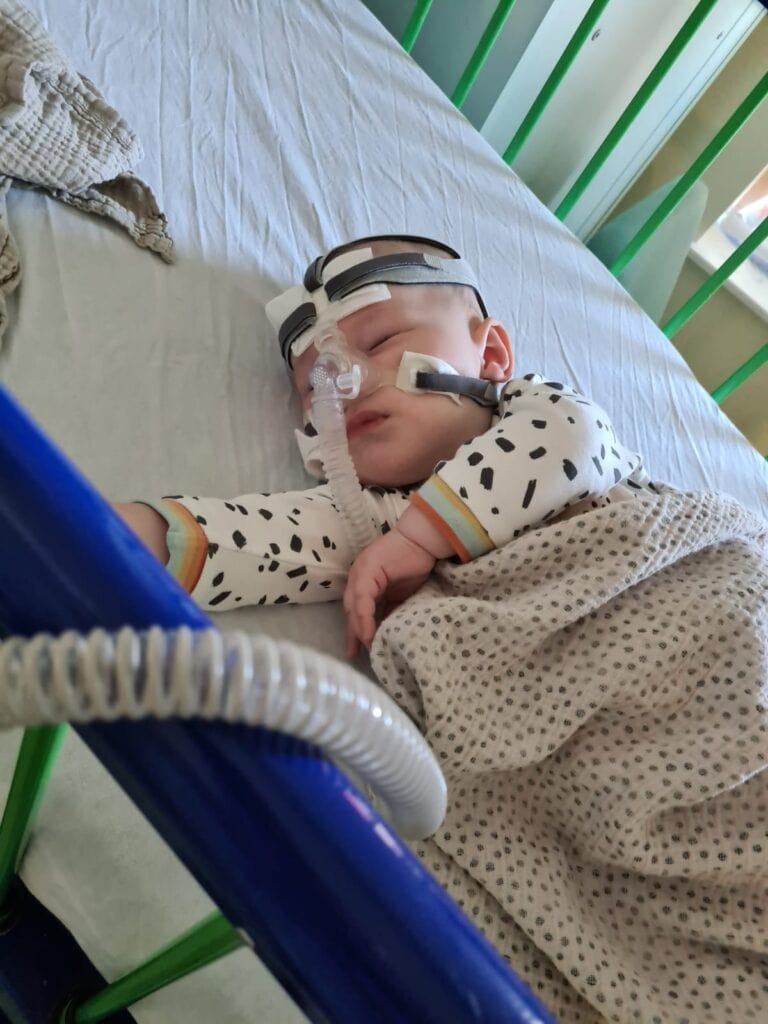
Casper (Mask Ventilated) and Beau (Tracheostomy Ventilated)

The most beautiful Keep Me Breathing Ambassadors!