
CCHS. Mask vs Tracheostomy vs Pacer
- May 4, 2023
CCHS. Mask vs Tracheostomy vs Pacer.
The differences, advantages, disadvantages and different CCHS children each type of ventilatory support work for. Explained simply for CCHS Patients and Parents
Introduction
- The type of ventilatory support varies by country and by hospital, even in the same country. For example in the USA, almost all CCHS patients will be supported via a Tracheostomy in early years, transitioning to mask or pacer support between 5-10 years old. However in the UK the situation is mixed and depending on your hospital trust, a mask or tracheostomy may be recommended. In some European countries mask ventilation is becoming more and more of a first choice. It is really important to realise that this is your choice and you should be given all the options. For some babies, mask ventilation can be successful, even in very early infancy. (For evidence of this, please see here and GOSH guidelines here). In some cases, for example where a CCHS baby cannot breathe adequately during waking hours when well, a tracheostomy may be the best and only option.
- Each method of ventilation has advantages and disadvantages and it is very important to consider both the medical and quality of life implications of each choice. Depending on the severity of CCHS, each option becomes more or less attractive. Mask ventilation has many advantages from a social perspective and also may produce preferable Neurocognition outcomes (see here). However a tracheostomy decreases dead space and lessens airway resistance and other papers argue provides better neurocognition outcomes.
- All parents making this decision should be able to speak to other parents who have previously made this decision to learn about the advantages and disadvantage of each type of ventilatory support. Please email us on info@keepmebreathing.com if you would like to do so and we will put you in touch. Please also check out the benefits and risks table below our pacing section on this page.
Pacing
Again, differing by country, some patients will transition from tracheostomy to mask ventilation between 5-10 years of age. In some countries some patients will instead transition from tracheostomy to diaphragmatic pacing. This involves an implantable pacer connected to an outside battery-operated, and easily portable, pacing transmitter. This is of great benefit to patients needing ventilation 12-24 hours per day, allowing freedom from a tracheostomy during waking hours. (please see more information here)
Keep Me Breathing – Creating new treatments
Keep Me Breathing is working on a fully implantable phrenic nerve pacer for CCHS patients which will deliver a treatment that will give CCHS patients a close to normal life. It will automatically adapt the rate and depth of a patients breathing based on their ventilatory needs and will not require a wired connection to an outside device in order to work. We hope it will offer true freedom for CCHS patients.

The Children.
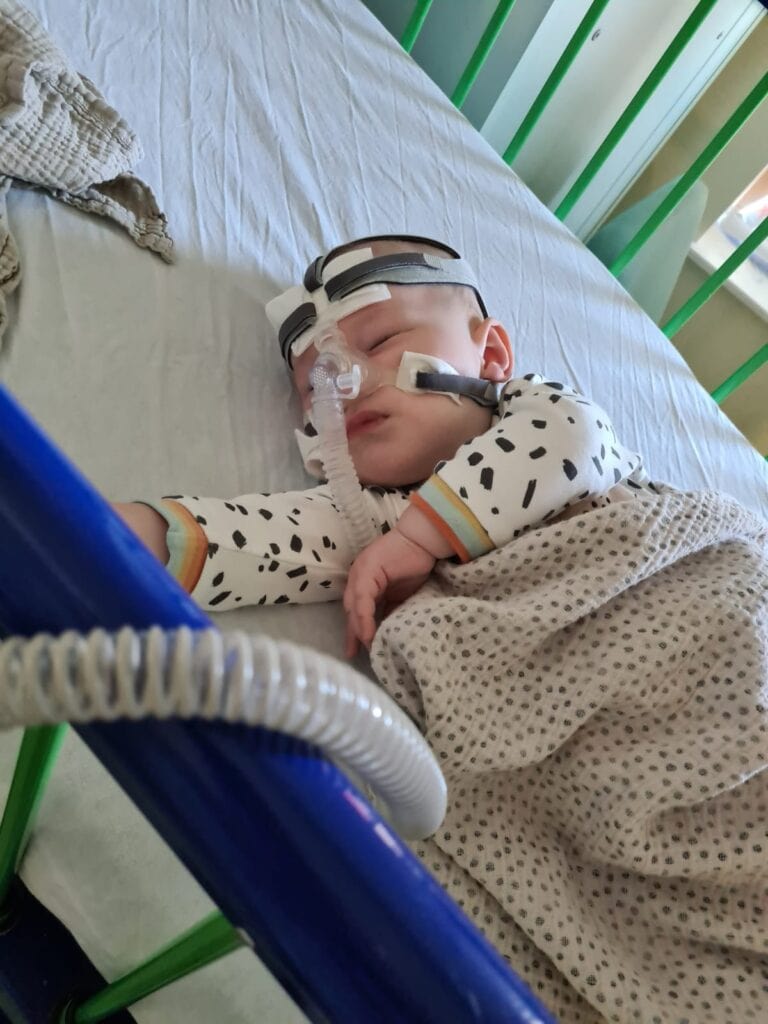
Casper (Mask Ventilated) and Beau (Tracheostomy Ventilated)
The most beautiful Keep Me Breathing Ambassadors!