CCHS Treatment and Options.

The differences, advantages, disadvantages and different CCHS children each type of ventilatory support work for. Explained simply for CCHS Patients and Parents

Introduction to CCHS Treatment

  • We have previously covered the advantages and disadvantages of different treatments for CCHS in this article.
  • Currently if a patient is born and diagnosed with CCHS in early infancy (within the first few months of life) there will be two primary options for treatment to enable your child (the patient) to come home safely. These are via supported ventilation by one of two methods.
  • 1.  Tracheostomy
  • 2. Mask Ventilation
  • Parents, and depending on the country, a team of nurses or carers to deliver the treatment is essential to bringing the child back home in as fast a timeline as it safely possible. Depending on diagnosis, other symptoms, clinicians, hospital and even country, this can be as soon as weeks, or many, many months. 
  • Each method of treatment (both artificial ventilation) has advantages and disadvantages and it is very important to consider both the medical and quality of life implications of each choice. For help with this, please read this article.

Current available treatments for CCHS

Tracheostomy - A basic explanation

A tracheostomy with mechanical ventilation is an intervention for newborns or infants. It is a surgical procedure that involves creating an opening in the trachea to insert a tube, providing direct airway access to ensure adequate ventilation.

Mask Ventilation - A basic explanation

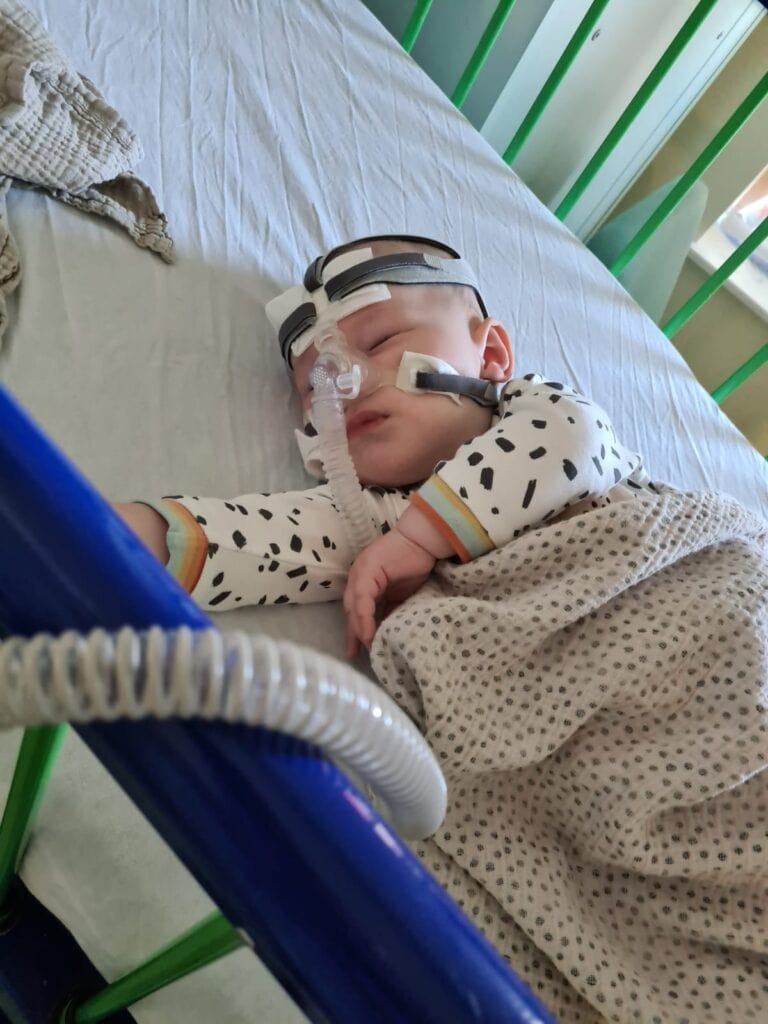
Non-invasive mask ventilation is an alternative treatment for newborns and infants with CCHS. This approach uses a mask or nasal interface to deliver positive airway pressure, supporting the child’s breathing.

As discussed, a full breakdown of the advantages and disadvantages of each treatment option can be found in this article. Each method has advantages and disadvantages, and may be more suitable (or less) depending on a range of factors.

Below is a basic table outlining the benefits and risks of each treatment method. You’ll notice there are two additional treatment options. Phrenic Nerve pacing (such as the Phrenic Nerve Pacer Built by Avery, The NeuRx® Pacer, and the new device being built by Keep Me Breathing) are not suitable for newborns and very young infants, however their advantages and disadvantages are discussed on the link provided above.

Treatments being actively developed

Keep Me Breathing are building the first next level pacer which will deliver a treatment giving CCHS patients a close to normal life. Unlike any existing treatments, this will automatically adapt the rate and depth of a patients breathing based on their ventilatory needs and will not require a wired connection to an outside device in order to work. Meaning true freedom for CCHS patients. To learn more, email us on info@keepmebreathing.com

The Children.

Casper (Mask Ventilated) and Beau (Tracheostomy Ventilated)

The most beautiful Keep Me Breathing Ambassadors!